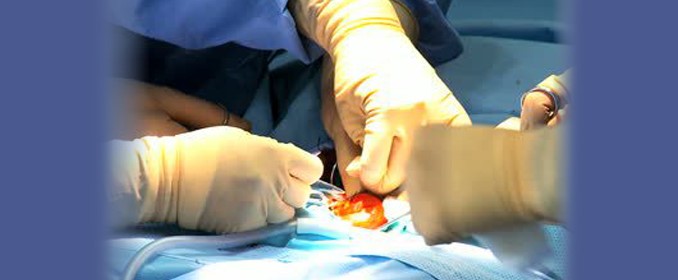
Prolapse of the uterus (womb) and/or vaginal walls is a common condition, with up to 11% of women requiring surgery during their lifetime. Prolapse generally occurs due to damage to the supporting structures of the uterus or vagina. Weakening of the supports can occur during childbirth or as a result of chronic heavy lifting or straining, e.g., with constipation, chronic cough, obesity, and as part of the aging process. In some cases, there may be a genetic weakness of the supportive tissues. Prolapse of the uterus can cause an uncomfortable dragging sensation or feeling of fullness in the vagina. In more advanced prolapse, the cervix can extend beyond the entrance to the vagina.
What is a vaginal hysterectomy?
This is a procedure in which the uterus is surgically removed through the vagina. The operation is frequently combined with prolapse repairs of the bladder and/or bowel and sling procedures for urinary incontinence.
How is a vaginal hysterectomy performed?
The operation is under general or spinal anesthesia. A cut is made around the cervix. The surgeon then pushes the bowel and bladder away from the uterus. The blood vessels supplying the uterus and surrounding tissue are then clamped, cut, and tied. The surgeon then removes the uterus and closes the top of the vagina, now known as the vaginal vault. Many surgeons will choose to add additional support stitches.
Complications
With any operation, there is always a risk of complications:
-
Complications due to anesthesia are very rare.
-
Clots (embolism). After any pelvic surgery, clots can form in the legs or lungs. This is a rare complication that is minimized by using support stockings and blood-thinning agents.
-
Severe blood loss and hematoma.
-
Infections
-
Injury to adjacent organs
-
Urinary retention
If you’re struggling with a pelvic floor disorder, we want to help. Contact Dr. Aneeta Talwar, Best Gynaecologist in Bangalore today, to learn about our services and treatment options.
Frequently Asked Questions
1. Can vaginal hysterectomy be performed if the uterus is enlarged?
It depends on the uterus’s size, shape, and the degree of prolapse. Your surgeon will assess whether vaginal hysterectomy for prolapse is suitable.
2. Will the vaginal opening become smaller after prolapse surgery?
The effect depends on the repair performed alongside the hysterectomy. If needed, the surgeon may address vaginal wall support as part of vaginal prolapse repair.
3. Can vaginal hysterectomy be performed if I have never had children?
Having no children does not automatically rule out surgery. The decision about vaginal hysterectomy surgery depends on the prolapse, anatomy, symptoms, and overall health.
4. Will I need a blood test before vaginal hysterectomy?
Yes. Your doctor may request blood tests to check your haemoglobin and general fitness for surgery. These are part of the preoperative assessment for hysterectomy.
5. Can I eat and drink normally before the operation?
You may need to stop eating and drinking for a specified period before anaesthesia. Follow the hospital’s instructions for vaginal hysterectomy preparation.
6. Will I have stitches after vaginal hysterectomy?
Yes. Internal stitches are commonly used to close the vaginal incision and may also support repaired tissues. These form part of vaginal hysterectomy recovery.
7. Can vaginal hysterectomy be done if I have diabetes or high blood pressure?
It may be possible when these conditions are appropriately managed. Your medical team will assess your fitness for prolapse surgery before proceeding.
8. Will I need someone to stay with me after discharge?
Having a family member or caregiver available initially can help with daily tasks and transport. Follow your hospital’s advice after vaginal hysterectomy treatment in Whitefield.
9. Can I travel by car after vaginal hysterectomy?
You should not drive until you can move comfortably, react safely, and meet your surgeon’s guidance. Arrange transport home after vaginal hysterectomy surgery.
10. What follow-up visits are needed after vaginal hysterectomy?
Your doctor will schedule follow-up to assess healing and discuss any concerns. Attending your post-hysterectomy check-up helps ensure your recovery is progressing appropriately.